Black History Month is more than a celebration—it’s an opportunity. An opportunity to tell fuller stories, to center voices that are often minimized, and to help students see themselves and others as history-makers, not just history-readers.
In upper elementary through high school classrooms, students are ready for deeper conversations, critical thinking, and creative expression. They don’t just want to memorize dates and famous names—they want to understand how Black history connects to their own lives and the world they live in today.
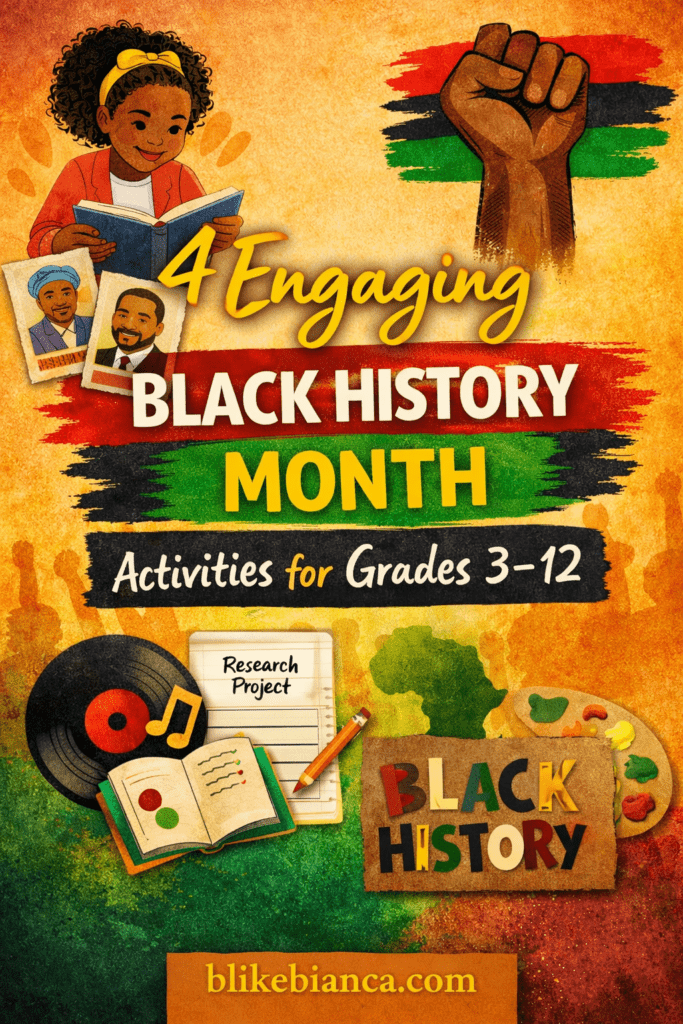
The lesson ideas below are designed to do just that. They are flexible, age-appropriate for grades 3–12, and easy to adapt across subjects. Most importantly, they move beyond surface-level activities and invite students to reflect, create, and engage with Black history in meaningful ways.
1. Black History Month Lesson: Learning Through Primary Voices
Why this lesson matters
Too often, Black history is taught about people rather than through their own words. This lesson centers primary sources—speeches, letters, poems, interviews, and autobiographical excerpts—so students hear directly from Black voices across history.
This approach builds literacy skills, historical thinking, and empathy, while helping students understand that history is shaped by real people with real emotions, struggles, and dreams.
How to implement
Step 1: Choose age-appropriate primary sources
- Grades 3–5: Short quotes, children’s books with first-person perspectives, or simplified letters
- Grades 6–8: Speech excerpts, diary entries, interviews, or poems
- Grades 9–12: Full speeches, essays, letters, or autobiographical passages
Step 2: Close reading and discussion Have students read or listen to the source and discuss:
- Who is speaking?
- What is happening in their life at this moment?
- What emotions or themes stand out?
- What does this tell us about the time period?
Step 3: Student response activity Students respond in one of the following ways:
- Write a reflection from the speaker’s point of view
- Create a short monologue or spoken-word response
- Illustrate a key moment or message
- Connect the message to a modern-day issue or experience
Extension ideas
- Pair historical sources with modern voices (artists, activists, athletes, or authors)
- Turn reflections into a classroom display titled “Black Voices, Then and Now”
2. Unsung Heroes Black History Month Research Project
Why this lesson matters
Black History Month often focuses on the same handful of well-known figures. While their contributions are important, students also deserve to learn about the scientists, educators, artists, inventors, community leaders, and everyday changemakers whose stories are rarely highlighted.
This project empowers students to become researchers and storytellers while expanding their understanding of Black excellence across fields.
How to implement
Step 1: Introduce the concept of “unsung heroes” Discuss what it means to be an unsung hero and why some contributions are overlooked in traditional textbooks.
Step 2: Research selection Provide a curated list or allow students to choose a figure who:
- Is Black
- Made an impact in their field or community
- Is not commonly featured in school curricula
Step 3: Research and synthesis Students research:
- Early life and background
- Major contributions or achievements
- Obstacles they faced
- Lasting impact on society
Step 4: Creative presentation Students present their findings through:
- A one-page biography
- A digital slideshow
- A podcast-style interview
- A museum-style display
Differentiation tips
- Provide research templates for younger students
- Allow collaborative projects for middle school
- Require citations and deeper analysis for high school
3. Black History Month and Pop Culture Connections
Why this lesson matters
Students are deeply connected to pop culture—music, sports, fashion, social media, and film. This lesson bridges the gap between history and students’ everyday lives by examining how Black history influences and shapes modern culture.
When students see history reflected in what they love, engagement skyrockets.
How to implement
Step 1: Choose a cultural lens Focus on one or more of the following:
- Music and hip-hop
- Sports activism
- Fashion and beauty trends
- Film, television, and media representation
- Social media movements
Step 2: Historical roots exploration Students investigate questions such as:
- Where did this trend or movement originate?
- How is it connected to Black history or resistance?
- Who are the pioneers behind it?
Step 3: Create a connection project Students create:
- A visual timeline
- A short video or reel
- A written analysis
- A comparison chart (past vs. present)
Discussion focus
- Cultural appropriation vs. appreciation
- Representation and visibility
- How history continues to shape identity
4. Black History Month Changemakers Project
Why this lesson matters
Black history is not just something that happened in the past—it’s happening now. This lesson helps students understand that they, too, are part of history and have the power to create change in their communities.
This activity is especially powerful for building student voice, agency, and social-emotional learning.
How to implement
Step 1: Study modern Black leaders and movements Introduce students to contemporary activists, educators, entrepreneurs, and artists making an impact today.
Step 2: Reflection and discussion Ask students:
- What issues matter most to you?
- How do these leaders create change?
- What does leadership look like at your age?
Step 3: Student action project Students choose one:
- Write a letter advocating for change
- Create a community awareness campaign
- Design a personal action plan
- Interview a local Black community leader
Final reflection
Students reflect on how Black history informs their understanding of justice, leadership, and responsibility.
Final Thoughts
Celebrating Black History Month should never feel rushed, shallow, or limited to a single week. When done intentionally, it becomes a time of deep learning, connection, and growth—for both students and educators.
These lesson ideas are designed to meet students where they are, honor Black voices authentically, and encourage critical thinking across grade levels. Whether you teach third grade or seniors, the goal remains the same: help students see Black history as essential, ongoing, and deeply human.
When students leave your classroom understanding that history is alive—and that their voices matter—you’ve done far more than check a box for the month. You’ve planted seeds that last far beyond February.